
We Should Seek Justice for Tulsa Massacre 100 Years Later
By Quinci LeGardye
California Black Media
May 31-June 1 marked the 100th anniversary of the Tulsa Race Massacre, one of the deadliest acts of racial violence in American history.
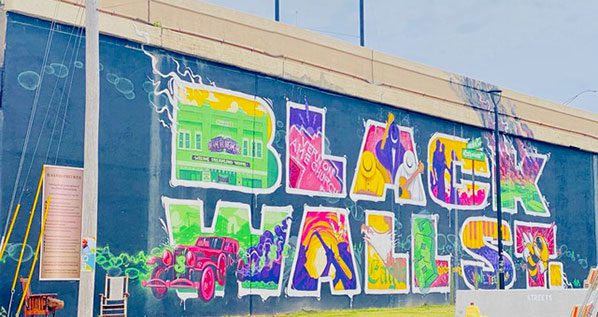
The Black community in Tulsa, known as the Greenwood District, which has been referred to as the “Black Wall Street,” was decimated by a heavily armed White mob, with as many as 300 unconfirmed deaths of Black residents and property losses totaling about $27 million in today’s dollars. The murder, the unlawfulness, the catastrophe, the immorality, the untold suffering borne by innocent people experienced during the race massacre is emblematic of the devastation and destruction that happened in countless majority-Black towns in American history.
In 1921, Greenwood was a thriving neighborhood of about 10,000 residents, which included Black-owned homes, grocery stores, hotels, nightclubs, billiard halls, theaters, doctor’s offices and churches. The area also had a Black-owned-and-operated newspaper called the Tulsa Star. The decimation of Black Wall Street was set in motion after Dick Rowland, a 19-year-old Black man was accused of sexually assaulting Sarah Page, a 17-year-old White woman, on May 30, 1921. The next day, a scuffle between a White mob aiming to Lynch Rowland and a group of armed Black men protecting him set off the massacre.
The standoff led to the White mob attacking Greenwood near dawn on June 1.
When they attacked, members of the White mob, some of whom had been deputized by city officials, shot Black people in the streets, ransacked homes, and set fires block by block. White pilots flew airplanes and dropped turpentine or nitroglycerin bombs on the neighborhood. As many as 300 Black people were killed and hundreds of others were injured. At least 8,000 Black Tulsans were left homeless and 6,000 were detained in internment camps. A 2001 Oklahoma state commission report found that the massacre led to $1.8 million in property loss claims from the residents of Greenwood.
A grand jury later blamed the Black men for the riots, though no one was ever charged with a crime. Rowland was later exonerated when Page failed to appear as a witness, and authorities concluded that Rowland most likely tripped and stepped on Page’s foot.

The Tulsa Race Massacre has become more well-known in mainstream America due to depictions on the popular HBO shows Watchmen and Lovecraft Country. Lovecraft Country recounted the events in depth, including portraying scenes with a family as they tried to protect their home. Watchmen offered a revisionist history of the Tulsa massacre. In that retelling, the descendants of the victims of the massacre received reparations and established new businesses in Greenwood.
Most grade schools in the United States, including those in Tulsa, do not teach children about the massacre.
The residents of Greenwood were resilient after the massacre, despite most of their insurance claims being denied due to the massacre being designated a race riot. After 1921, Greenwood was rebuilt, and thrived as a business district from the 1930s to the 1950s, though not at the same scale. In the 1960s, many of the houses and businesses were claimed by the city through eminent domain for the purpose of blight removal, and a highway was built through the heart of Greenwood.
Three known survivors of the massacre testified before a congressional committee considering reparations for survivors and descendants of the massacre on May 19. Viola Ford Fletcher, Hughes Van Ellis and Lessie Benningfield Randle were children in 1921 and are now 107, 100 and 106, respectively. In their testimonies, they recalled their lives before the attack, which felt safe and prosperous, as well as the events of that night.
“I will never forget the violence of the White mob when we left our home. I still see Black men being shot, Black bodies lying in the street. I still see Black businesses being burned. I still hear airplanes flying overhead. I hear the screams. I have lived through the massacre every day. My country may forget this history, but I cannot,” said Fletcher.
Fletcher, Ellis and Randle are plaintiffs in a reparation lawsuit levied against Tulsa city and county officials by survivors of the massacre and their descendants. They accuse Tulsa officials of enriching themselves by decrying the massacre while trying to turn the remains of Greenwood into a tourist attraction. The lawsuit also accuses city and county officials of implementing zoning ordinances that kept Black business owners and residents from rebuilding and diverting public funds to predominantly White neighborhoods instead of predominately Black Greenwood and North Tulsa.
There is a straight line that runs from the horrors and injustices of the 1921 race massacre to the plight of the struggling Black community in Tulsa today – as is the case in many American cities. Black communities across America are still reeling from the effects of blatant acts of racial hatred and violence, including Jim Crow laws, redlining and the construction of highways through Black neighborhoods.
Americans of all races and backgrounds all over the United States must stand with Greenwood in its current fight for reparations. The outcome will serve as blueprint to address the incredible losses of life and property Black communities all over the country have suffered throughout our country’s history.

Leave a reply
You must be logged in to post a comment.