
CA Big City Mayors Want $1B Annually For Homelessness
California Black Media Staff
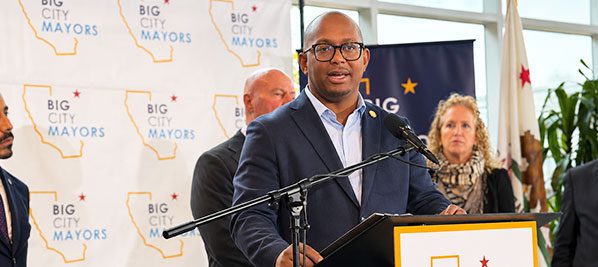
The bipartisan California Big City Mayors coalition called on the next governor and Legislature to guarantee at least $1 billion annually in homelessness funding, expand mental health treatment and rein in litigation costs straining municipal budgets during an Oct. 30 summit at Riverside City Hall.
With affordable housing at the forefront of their agenda, the mayors emphasized the need for sustained state investment to address California’s housing and homelessness crises.
The 13-city coalition represents nearly 11 million residents and advocates for stronger state-local partnerships on housing, public safety and economic development.
California’s affordability gap underscores the urgency. According to the California Association of Realtors, just 19% of households could afford the state’s median-priced single-family home, costing nearly $895,000, in the third quarter of 2026. Buyers needed approximately $228,000 in annual income. Nationally, 39% of households could afford a median-priced home.
The mayors stressed that housing for formerly unhoused people must be paired with treatment and prevention.
“Housing alone will not solve this crisis,” Stockton Mayor Christina Fugazi said. Cities, she explained, increasingly respond to psychiatric emergencies and addiction without sufficient resources to ensure continuing care.
Riverside Mayor Patricia Lock Dawson, coalition chair, said the summit would turn shared priorities into a legislative agenda.
The state’s Homeless Housing, Assistance and Prevention program (HHAP) finances shelters, outreach, interim housing, prevention and permanent housing. Although California provided approximately $890 million for its seventh funding round, future appropriations remain uncertain. Mayors want at least $1 billion annually through multiyear commitments, with flexible local spending and measurable results.
“We set out to restore HHAP funding, and we’ve accomplished that,” said Dawson. “But restoring HHAP funding was just the beginning.”
“Cities can’t build a long-term solution to homelessness on a year-to-year funding commitment,” San Jose Mayor Matt Mahan said. “We need predictable resources, clear performance measures and the flexibility to invest in programs that are actually moving people off the streets and into stable housing.”

Fresno Mayor Jerry Dyer, coalition vice chair, cited a 23% decline in homelessness across the Fresno-Madera Continuum of Care over four years. Fresno has built about 1,300 affordable units, with 1,400 more planned or underway, he said. Of those served, 53% achieved a “safe exit,” including housing or family reunification.
“We cannot afford to go backwards,” Dyer said.
The mayors also want clearer treatment referrals, more capacity and stronger coordination among cities, counties and state agencies.
Anaheim Mayor Ashleigh Aitken said HHAP helped nearly 500 people move into permanent housing. She highlighted the Tampico Hotel, which houses young adults, including former foster youth.
“Spending to reduce homelessness is one of the best investments we make and it is time to make it permanent,” Aitken said.
Irvine Mayor Larry Agran emphasized homelessness prevention as living costs rise. He said locally operated outreach, interim housing and prevention programs need continued flexible support, not replacement by new construction funding.
The mayors also demanded faster implementation of behavioral health reforms, including CARE Court and a separate Proposition 1 approved in 2024. That $6.4 billion bond was intended to expand treatment facilities and supportive housing, with original goals including 6,800 residential beds and 26,700 outpatient slots.
Mahan said San Jose has built more than 2,000 interim housing units and reduced unsheltered homelessness 32% in 18 months, yet thousands remain outdoors.
The coalition plans to press its housing, homelessness, treatment and liability priorities during the 2027 legislative session.
Dawson said the objective is “identifying the issues our cities cannot solve alone and working directly with the Governor and Legislature to advance meaningful, statewide solutions.”
