
Holistic Vision for Lutheran Social Services
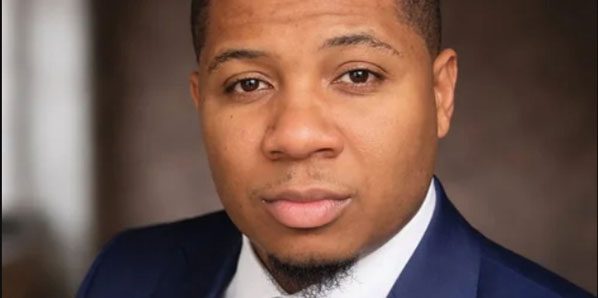
By Dianne Anderson
Moving in and out of shelters with his family as a child through his teen years gave Donald Smith a closeup view of homelessness, and the systems that are supposed to help families get back on their feet.
Those early years went far beyond anything learned in textbooks or training manuals. Now, on the other side of it, he understands what it takes to make it out.
“Sometimes you were treated well. Sometimes you weren’t,” he said. “With me, I always kind of want to lead with treating people just as equal as they are, as myself because I believe they are. I talk to them just as human beings, which they are.”
In the coming months, he expects demand to increase at their new San Bernardino Community Wellness Campus, a partnership with the city and county that combines emergency shelter, interim housing and a wider range of supportive services.
As the Executive Director of the campus for Lutheran Social Services of Southern California (LSSSC), Smith knows the need is already there. The organization is also working to fill other gaps in local services, including plans for a new women’s shelter in the area.
As part of that rollout, the site is being renovated with updates to shared spaces like the kitchen. When it opens, it will add a third housing option for women experiencing homelessness, women fleeing domestic violence, and families.
“For women that are dealing with domestic violence, or any type of homelessness, we see that there’s a need out there for women,” he said. “We just wanted to make sure we create a space for them, and families. That’s something we’re opening up in the next few weeks as well.”
While Project Homekey is not a new program, it is taking on a new local shape at the Campus. Smith said the project has created a home worth caring about and a sense of ownership. In the shared space, clients eat together and spend time in a clean, spacious courtyard, and feel free and comfortable to talk with staff.
“So it’s been an absolute pleasure just going out to the courtyard,” he said. “It just clears your mind, and helps you feel better about the space that you’re in.”
The physical building is only part of the equation. He said the real goal is fostering a culture where residents feel invested in the space and in one another. In orientation, newcomers are encouraged to take care of their space, and if anyone sees something broken, let staff know so it can be fixed.
“I see clients every day, I go have conversations with them, or in the cafeteria, they’re breaking bread with one another, and talk with them about food areas in the space. Just genuine conversations,” he said.
Another big part of the healing process is diversity. Too often, people of color feel isolated in similar programs because they do not see anyone in leadership who looks like them. That is not the case at the new facility, where the staff, mostly Black and Brown, reflects strong professional diversity, from credentialed clinicians to compliance directors, regional executives and specialized case workers.
The facility takes walk-ups, drop-ins and formal referrals through 211 and city and county systems. Outreach teams go out, meet people where they are and connect them on-site.
It’s also a different model from traditional emergency shelters, where people are rushed out into the street first thing in the morning. With their program, the goal is stability. Clients are told they can stay, the space is theirs, complete with individual rooms and basic amenities like air conditioning.
And, he’s always amazed when he walks new arrivals through their rooms, showing them how to use a door code, and their reactions to the simple things in life.

“I went outside and rang the doorbell, and the smile on him was like, like ‘I have a doorbell!’ That interaction made me have to realize like we take so many small things for granted. A doorbell, and that meant most to me,” he said.
Once things get rolling, he feels opportunities could be endless. The goal is to get at least 60 percent of clients into permanent housing within a year, focused on long-term stability. Eventually, he hopes to extend the current six-month stay to 12 months.
But, getting into secure housing in a six month window feels tight, he said, especially compared with transitional models he oversaw in San Diego.
Homelessness in San Bernardino is different. Locally, the population is broader, the timeline is faster and the support network is thinner. He wants to rework the model into something more sustainable and better track local veterans for potential dedicated housing options.
Case managers on campus also work with each resident to move from immediate stabilization to long-term exit planning. For residents with permanent housing already lined up, the program helps bridge resources. For others, managers guide next steps, linking eligible clients to transitional housing, emergency shelters, substance abuse treatment or veterans’ services.
Structured for different stages of need, the 70-bed emergency shelter serves as an entry point for people coming off the streets, while 140 interim units provide the next step. Clients work with case managers on income, employment, health care and permanent housing as they move toward stability.
“Together, these programs create a structured pathway that promotes long-term housing stability and successful exits from homelessness,” he said.
In the process, the organization will track program completion, mental health stability, and employment and income outcomes from entry through exit.
Looking ahead, leadership is planning for sustainability beyond the project’s $34.9 million Project Homekey grant, pursuing diversified funding, including behavioral health and HUD grants, along with federal, state and private sources, while building community partnerships to sustain the work.
“Our goal is to ensure that the Community Wellness Campus remains a stable, long-term resource that provides housing, supportive services, and pathways to self-sufficiency for individuals experiencing homelessness throughout San Bernardino County,” he said.
Having run an emergency shelter on site since 2016, LSSSC holds a decade of data on what people actually need when they walk through the door, and Smith emphasized that housing alone is not enough to create lasting stability.
When housing is paired with comprehensive supportive services, including case management, behavioral health support, workforce development and connections to community resources, he said people are successful.
He said the Community Wellness Campus was built to provide immediate physical safety, offering a client-centered, trauma-informed space for healing, and creating a path to independence.
“Ultimately, the lessons learned over the past decade have reinforced the importance of treating homelessness holistically, addressing not only housing needs, but also the underlying barriers that can prevent individuals from achieving lasting independence,” he said.
For more information, see: https://www.communitywellnesscampus.org/
